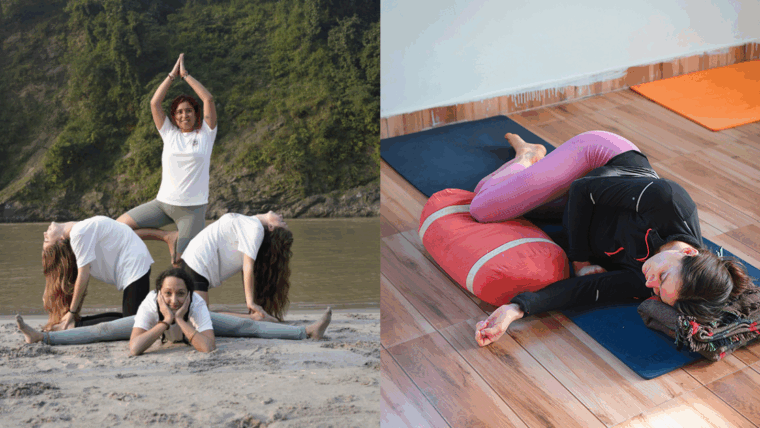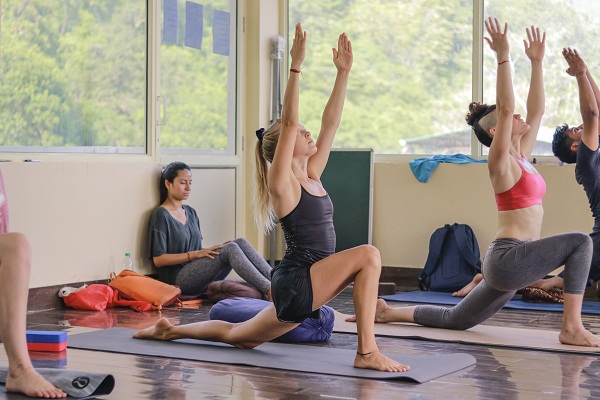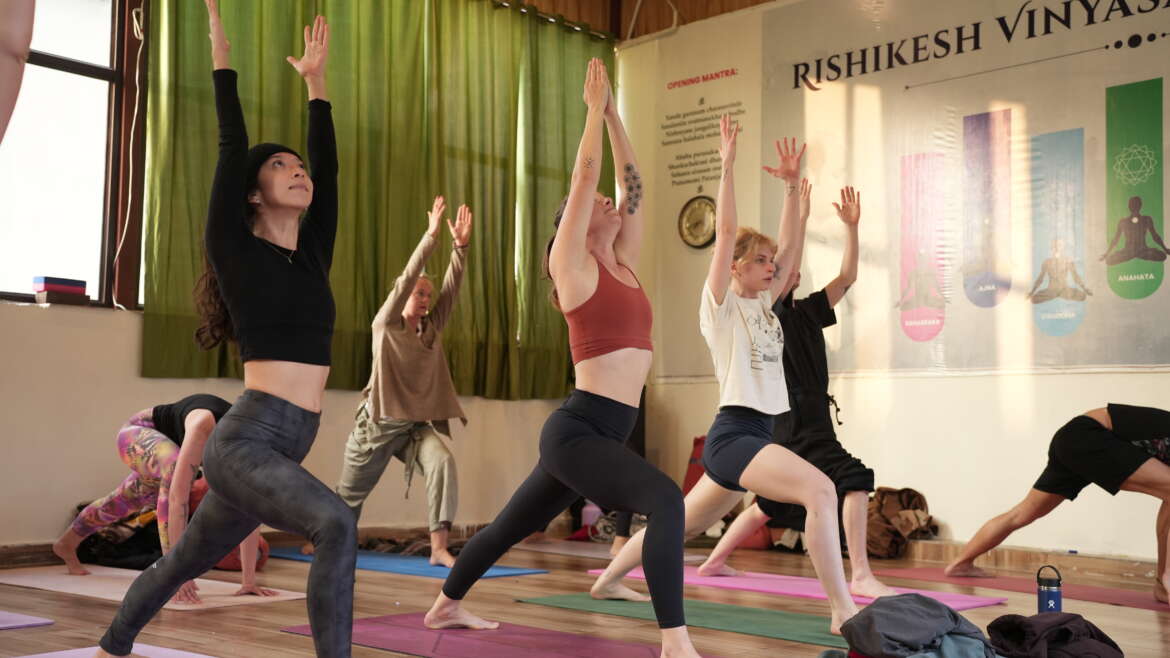
Yoga has undergone a profound revolution and 2026 is defined by sustainability. People no longer want just “traditional” poses. Today’s practitioners ask “How do I get into this pose with no injury”? They want to know how Vinyasa impacts their nervous system and joint health. This is where Functional Vinyasa or Liquid Flow comes in. It prioritizes joint longevity, fascia health, and nervous system regulation. Enroll in our 200 Hour Vinyasa Yoga Teacher Training in Rishikesh today!
What Is Functional Vinyasa?
Traditional Vinyasa often relies on choreography-based sequences, which but lead to repetitive stress injuries. However, functional Vinyasa is rooted in biomechanics and neuromuscular control. It focuses on the internal mechanics of the transition.
This approach moves toward movement intelligence. By mixing functional movement patterns like pulling, rotation, and eccentric loading, we create a practice that prepares the body for the complexities of real life.
The Fascia Factor
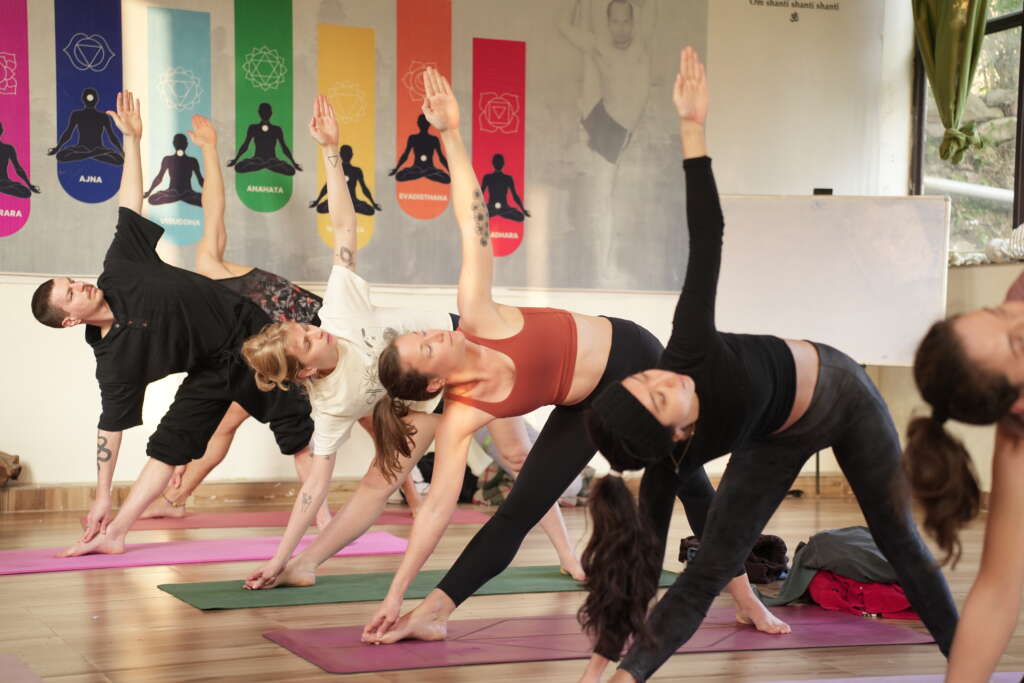
In 2026, we no longer view the body as a collection of isolated muscles. We see it as a continuous web of fascia, the sensor and communicative connective tissue. Functional Vinyasa utilizes multi-planar movement and slow-load transitions to hydrate the fascia.
Resilience over Flexibility: Functional Vinyasa emphasizes biotensegrity.
Joint Nourishment: Through rhythmic, wave-like movements, we stimulate the production of synovial fluid, essentially “oiling” the joints from the inside out.
Liquid Flow: Protecting the Big Four
The most common challenging areas in yoga are the knees, hips, shoulders, and spine. Functional Vinyasa protects these areas through joint centration, circular transitions, and micro-mobility. This is a practice that feels like a massage for the skeletal system.
The Nervous System Reset
Functional Vinyasa is also popular for the neurological payoff. Unlike traditional power yoga that keeps the body in a state of sympathetic dominance, functional Vinyasa is designed to “up-regulate” the parasympathetic nervous system. It is about training the nervous system to remain calm under load. A properly designed Vinyasa practice leaves you reset that a standard gym workout cannot do.
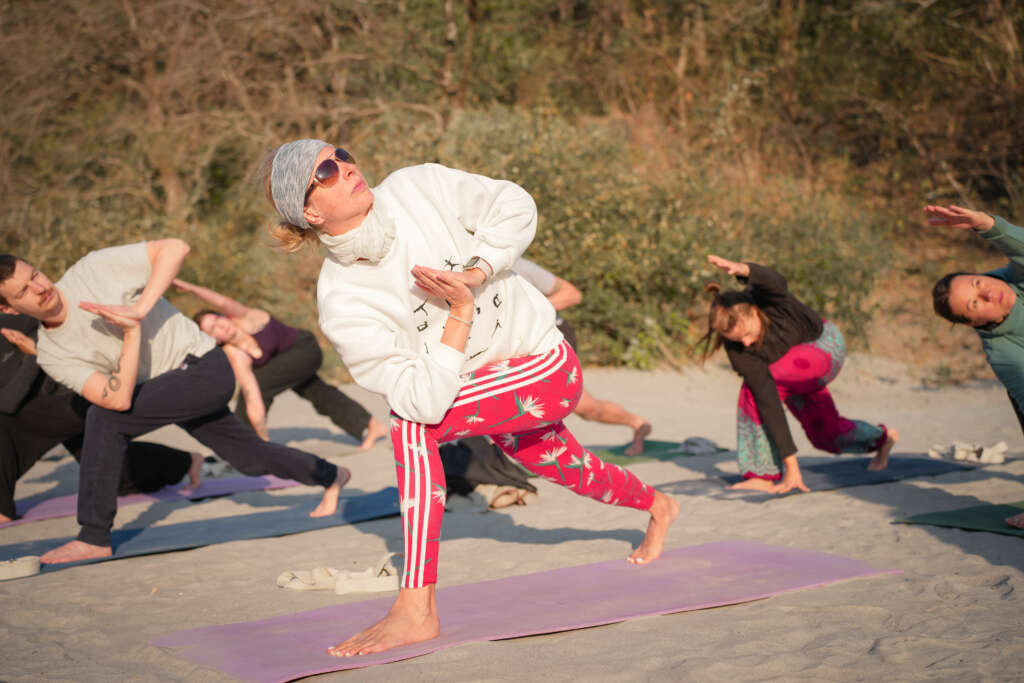
The Evolution of Teacher Training in Rishikesh
When choosing a 200 Hour Vinyasa Yoga Teacher Training Rishikesh at Rishikesh Vinyasa Yoga School, we don’t only teach the history of the Vedas. Our modern teachers are must be a bridge between ancient wisdom and contemporary movement science.
Our methodology focuses on fascia-aware transitions, intelligent pacing, and joint safety literacy. It’s about combining the tradition of Ahimsa with the lens of 21st-century anatomy.
If you are an aspiring teacher, the real demand in 2026 is for injury-informed educators. A teacher who understands joint centration and fascia resilience builds instant credibility. By enrolling in a 200 Hour Vinyasa Yoga Teacher Training Rishikesh, you are memorizing a script and learning the “why” behind every movement.
Conclusion
Functional Vinyasa is more than a style. As we move further into 2026, we now know that we can build strength and flexibility. Join the 200 Hour Vinyasa Yoga Teacher Training in Rishikesh today!! Call us today for more details.